If you’ve asked three contractors how much should office cleaning be and received three numbers you can’t compare, you’ve learnt something about the three contractors and nothing about the price. Each one priced a different job, and none of them told you which parts they left out. One assumed the bins go out twice a week, another assumed nightly. One priced the kitchen as a wipe-down, another as a degrease. The variables underneath any commercial cleaning price in Sydney are knowable, and once you can name them you can ask for a comparison that means something. There are no dollar figures here, because a figure with no scope attached tells you nothing.
Why two quotes for the same office can be worlds apart
A cleaning price is built from labour hours, consumables, equipment, travel and the risk the contractor carries on the site. Almost every variable in this article comes back to hours: how many people, for how long, how often, and at what time of day. Change one input and the hours move. That’s the whole mechanism.
Where it gets slippery is that most of those inputs are decided by assumptions the contractor makes while walking your floor, and they rarely write those assumptions down. We see this a lot. A manager hands over a floor plan showing 1,200 square metres, three contractors walk it, and each one builds a different picture of what “clean” means in that building. The quote arrives as a single monthly figure. The assumptions stay in the estimator’s head.
That matters most when you’re comparing. If the cheapest quote assumed your washrooms get a wipe and a restock, and the dearest assumed a full sanitise with the dispensers pulled apart, you’re choosing between two standards. You’ll find out which one you bought about six weeks after the contract starts, when the tiles start to look tired and the complaints begin.
Ask for the assumptions, not just the number. A contractor who can tell you how many hours a week they’ve allowed, and how those hours split across the site, is a contractor you can hold to something. One who can’t is quoting a feeling.
The variables that move the price

Floor area only gets you a bracket
Square metres give you a rough range and little else. Two offices of identical area clean at very different speeds depending on what’s sitting on that area. An open-plan floor with hot desks, clear runs for a machine and a handful of meeting rooms cleans fast. The same area broken into forty partitioned offices, a boardroom, two kitchenettes and a corridor network takes longer, because every doorway is a stop and every partition is an edge a vacuum has to work around.
Furniture density does the same thing. Desks with monitor arms, cable trays and under-desk storage slow a vacuum down more than any plan drawing suggests. So does anything that has to be moved and put back.
Count the stops, not the metres. When you walk the site with a contractor, count rooms, doorways and lifts. That number predicts the labour better than the floor plan does.
How often you clean changes the unit economics
Frequency is the lever most managers reach for first, and it cuts both ways. Daily service costs more in total but less per visit, because the cleaner arrives to a predictable amount of soil and gets through it at a steady rate. Drop to twice a week and each visit takes longer than half a daily visit, since bins are fuller, kitchen surfaces have set and carpet soil has been walked in.
There’s a tipping point in most buildings where reduced frequency stops saving money and starts creating periodic work instead. Carpets that would have held up under daily vacuuming need extracting sooner. Hard floors lose their finish and need stripping back. You’ve moved spend out of the routine scope and into the periodic scope, usually at a worse rate.
If you’re trimming a budget, we’d cut depth before frequency in most offices. Keep the cleaner on site at the same rhythm, and move some tasks onto a weekly or fortnightly cycle within that visit.
Access hours and the building’s rules
The hours your contractor can work are a price input, and a big one. After-hours cleaning in a tenanted office prices differently to a day shift, and a site that only opens between 6pm and 9pm forces a contractor to put more people on at once instead of spreading the work across a shift. Weekend-only access does the same thing.
Then there’s everything the building puts between the cleaner and the work. Lift bookings, loading dock windows, security escorts, sign-in systems, swipe-card zones that need a supervisor present. None of that is cleaning, but all of it is paid time. A contractor who has worked in similar Sydney buildings will price it. One who hasn’t will discover it in month two and come back asking for a variation.
Tell them the access rules at quote stage. Dock hours, after-hours lift access, induction requirements, and whether the bins go to a basement chute or out to the kerb. It costs you nothing and removes the most common source of mid-contract price creep.
Washrooms, kitchens and the parts people complain about
Washrooms and kitchens carry most of the complaint risk in an office and a disproportionate share of the labour. The number of pans, basins and urinals matters more than the room’s size. So does the fit-out: a tiled wall with deep grout lines takes longer to bring back than a laminate panel, and a sensor tap with a tight base collects more than a lever.
Kitchens vary even more widely. A tea point with a sink and a microwave is a five-minute job. A full staff kitchen with a dishwasher, a bench used for lunch by eighty people and a fridge that someone has to empty on Fridays is a different task entirely, and it’s the one that generates the emails.
When you ask about these rooms, ask what’s included. Does the price cover emptying and wiping the fridge, descaling the kettle zone, cleaning inside the microwave, pulling the bin out and washing the housing? Those are the items that fall out of a cheap quote first.
Floor types decide the machines and the cycle
Carpet, vinyl, polished concrete, timber and tile each carry their own routine and their own periodic work. Carpet needs vacuuming and, at some interval, extraction. Hard floors need the right pad and the right chemical, and the wrong one on a sealed surface will cost you a refinish. Entry matting at the door protects both for less than any periodic programme does.
The quote should name the floor types, say what happens to each, and say how often. If a quote says “floors as required”, you don’t have a scope. You have a line of text that will be interpreted in your contractor’s favour every time.
Consumables and the gap in the line items
Consumables are the quietest difference between two quotes. Hand towel, toilet paper, soap, bin liners, sanitiser: someone pays for them, and whether that’s you or the contractor can shift a monthly figure substantially without changing a minute of labour. Supplied-and-charged, supplied-and-included, and client-supplied are three different commercial arrangements, and plenty of quotes don’t say which one they are.
Dispenser type matters too. Jumbo rolls and folded towel run at different consumption rates, and a busy washroom with an open-dispensing towel unit will burn through stock faster than the same washroom with a controlled unit. If your contractor supplies, ask whether the price assumes a usage cap and what happens when you go past it.
Compliance, safety and what sits behind the hourly figure
The last variable doesn’t appear on any walk-through. Chemicals need safety data sheets available on site. Wet floors need signage and a plan for when the floor is wet during occupied hours. Working at height to reach a high-level surface needs a method, and plant areas need an induction. Under the model work health and safety laws explained by Safe Work Australia, duties at a workplace are shared, so your contractor’s safety practices become part of your site’s safety picture.
Slips are the one to watch in an office. Cleaning is one of the few activities that creates a hazard while removing one, and the way a contractor sequences a wet floor in a lift lobby tells you a lot about how they work. Ask how they handle it. A good answer is specific about time of day, signage, and whether they clean the lobby in halves.
Why a per-square-metre rate flatters the wrong building
A rate card priced by area is easy to compare, and that’s precisely its appeal. It’s also a blunt tool, because it prices the thing that varies least and ignores the things that vary most. Two sites of the same area, with the same rate applied, can need labour that differs by half again once you count washroom fixtures, partitioned rooms and access constraints.
The per-square-metre figure also hides where the money goes. When a complaint lands on your desk about the third-floor kitchen, a rate card can’t tell you how many minutes were allowed for that room. A scope-based quote can, because it lists the task and the cycle.
A tailored scope is a list of what gets done, where, and how often, with the hours behind it visible. It takes longer to build and longer to read. In return you get a document you can audit, vary and hold against the next quote, which is what you need when you go to market.
How to get three quotes you can compare
Write the scope yourself before you go to market. Even a rough one. List every area by name, the floor type in each, the fixture count in washrooms, what sits in each kitchen, and the frequency you want for each task. Hand the same document to every contractor, and the comparison does itself.
State the access conditions in writing. Hours, inductions, lift and dock rules, where the waste goes and who takes it there.
Decide the consumables question before the quotes come in. Say whether you want them supplied, and if so, whether they sit inside the price or get invoiced separately.
Ask for the labour hours per week. Just hours and how they’re distributed across the week. Two quotes at the same price with a 30 per cent gap in hours are telling you something important.
Ask what’s deliberately excluded. Windows above ground level, external areas, periodic carpet work, after-hours call-outs. A contractor willing to name their exclusions is easier to work with than one whose quote appears to cover everything.
Walk the site with every contractor
Walk it with each of them instead of emailing the plan. It takes an hour and it’s where the useful questions get asked, usually by the estimator who notices the second kitchen on the mezzanine. If a contractor quotes off a floor plan without visiting, treat the figure as indicative at best.
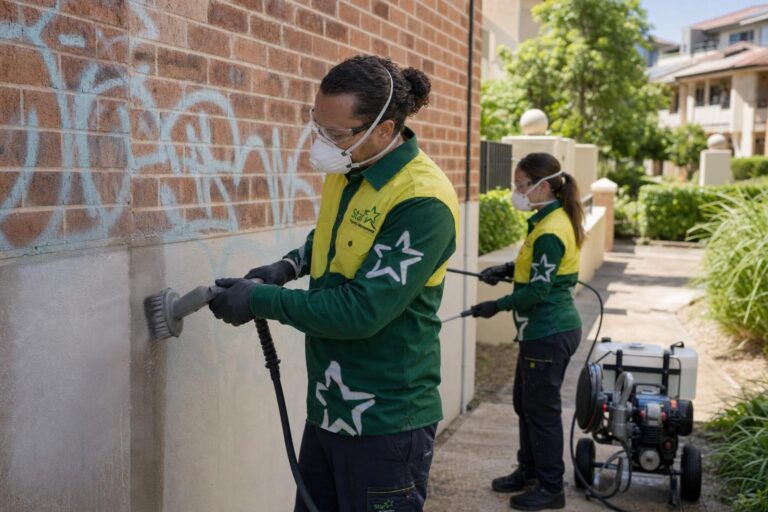
One more thing to settle early: whether you want cleaning alone or cleaning alongside the other work on site. If the same contractor handles the broader property and grounds work on your site, the graffiti on the stairwell wall and the mark on the lobby floor stop being two phone calls and two invoices.
Frequently asked questions
There’s no single figure, because the price is built from labour hours. A small office with two washrooms, a full kitchen and partitioned rooms can need more hours than a larger open-plan floor with one amenity block.
Scope-based pricing beats both. Rate models price an input, so neither one tells you what happens in your washrooms, how often the carpet gets extracted, or who pays for hand towel.
Yes, in total, but less per visit. Reduced frequency often shifts spend into periodic work like carpet extraction and hard-floor restoration, so the saving is smaller than the headline suggests.
Ask for weekly labour hours, a written task-and-frequency list by area, the consumables arrangement, and a list of exclusions. Those four answers make quotes comparable.
What to do before your next contract review
Pull out your current cleaning scope and read it the way a stranger would. If it doesn’t name your floor types, count your washroom fixtures or say how often the kitchens get a deep clean, that’s where your next complaint is coming from, and it’s the document to fix before you go anywhere near a price. Spend an hour writing it properly and every quote you receive afterwards becomes readable.
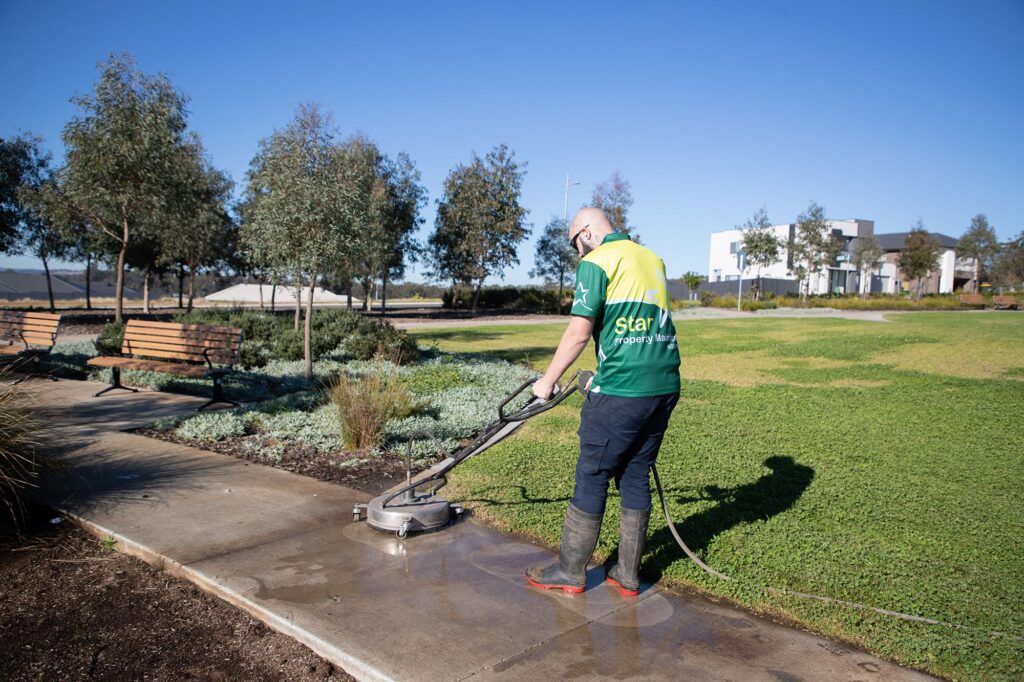
Star Property Maintenance has worked on Sydney sites since 2002, family owned and operated. Star PM provides tailored commercial cleaning, property maintenance and grounds maintenance services through a combination of in-house teams and trusted specialist contractors, depending on the scope, location and service requirements of each project. For offices that covers carpet and hard floors, high-touch surfaces, kitchens and washrooms, with high-pressure cleaning, graffiti removal and handyman work available on the same site.
If you’d like the scope for your building written out properly before you compare it against anything, call 02 9606 8656 or email sales@starpm.com.au and we’ll walk the site with you. You can also send the details through the contact page. Get a free quote.