A fortnightly mow reads as reasonable in June. By the second week of October the same site on the same cycle has grass over the edging, seed heads on the vacant lot beside the car park, and two emails from residents. A grounds maintenance schedule for commercial properties in Sydney only works if it moves with the year, because growth and fire risk run to different calendars. The twelve months below are set out for the person who signs the contract rather than the one pushing the mower.
Why a flat mowing frequency costs you twice
Warm-season turf in Sydney runs hard from October to March and almost stops between June and August. A contract written as 26 even visits over-services the site through winter and falls behind in spring, which is exactly when people are outside and noticing. You pay for the same number of visits either way. The loss shows up in complaints.
Then there’s the safety side. Long grass on vacant land hides rubbish and broken glass. It also blocks sight lines at driveway exits and builds fuel load on larger lots before summer. Grounds work gets judged by the same eye that judges how clean the rest of the property looks, so a site a fortnight behind on mowing reads as a site nobody is managing.
What a grounds maintenance schedule for commercial properties should name
Frequency in seasonal bands. Three bands cover most sites: peak growth, shoulder and the cool-season minimum, with the changeover dates written in.
The task list inside a single visit. Mowing is one line of several. Edging, weed control in beds and pavement joints, turf and garden maintenance and litter removal all need naming, or they turn up later as extras.
The work that doesn’t sit on a cycle. Storm clean-up, drainage checks, fire-season clearing and vegetation management where growth is pushing into fences get triggered by conditions. Your contract needs a response time for each.
Who reports, and what the report shows. A dated sheet and photographs after each visit let you answer a tenant, a board or an asset officer without driving out there yourself.
September to November: growth outruns the contract
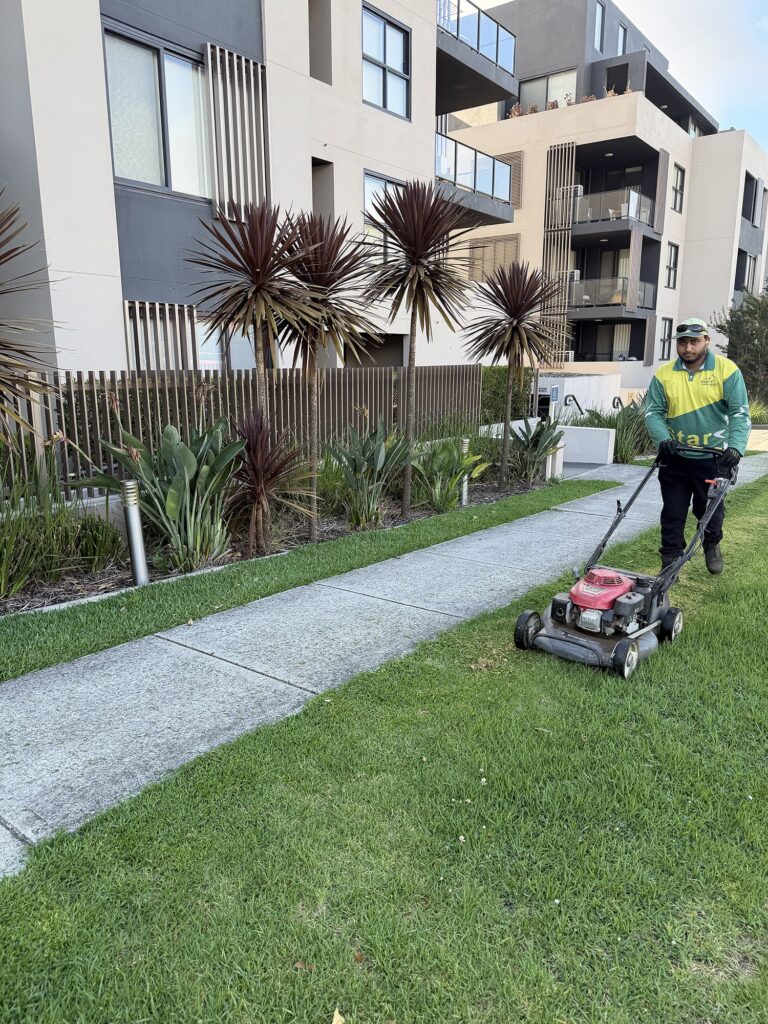
From mid-September, mowing on irrigated turf and anything on a drip line moves to weekly or fortnightly. Slashing on vacant land, reserves and open space is best done before the grass sets seed, because one pass in October saves two in December. Weed control works while weeds are soft and the soil is damp, and a spring pass through pavement joints holds the site through to autumn.
Mulch should be down and watered in by late November. Mulch laid in January sits on soil that’s already dry and hot, and it does little for you. Hedge and structural pruning sits after the spring flush, once growth has hardened. On larger lots, this is also when you start clearing back from boundaries, buildings and access tracks, rather than in the first week of a total fire ban.
December to February: heat, storms and the fire danger period
Growth stays fast while the soil holds moisture, but the cutting height should come up. Scalping turf in a 38-degree week leaves you with bare patches and a weed problem in March. Storms are the other variable. A twenty-minute cell drops bark and leaf litter across car parks and drainage grates, so the contract needs a storm clean-up and rubbish removal trigger with a stated response time.
The statutory bush fire danger period in NSW generally runs from October to March, with local variations, and the NSW Rural Fire Service sets the rules on permits and hazard reduction work. Check which rules apply to your site before you book any clearing. One note on hard surfaces: if your car park stains every summer, that’s a drainage question as much as a cleaning one.
March to May: the drainage window
Autumn is when the pits and grates earn their keep. East coast lows arrive with real volume, and a drain already packed with summer leaf litter floods the garden beds and then the loading dock. Clear pits, grates and channels in March, and check them again in November before the summer storms.
Growth slows through April, so mowing moves to three-weekly and then monthly by May. March is the window for turf repair and overseeding where foot traffic has worn the lawn through summer, because the soil is still warm enough for it to take. Deciduous leaf litter starts in April on sites with plane trees or liquidambars, and it needs a defined sweep frequency or it blocks the drains you just cleared.
June to August: slow growth, everything else
Mowing may drop to monthly or six-weekly, and that’s the point of the cool season. The money freed from mowing goes to the work you can’t do in November: garden bed renovation, mulch top-up, weed control before the spring germination, fencing repairs, painting and make-good on vacant units. Tree work is easier while deciduous canopies are bare.
Shaded paths, ramps and stairs grow moss and algae through a Sydney winter, which is a pressure cleaning job to book before someone slips. Winter is also when you should be writing next year’s bands, because a contract reviewed in June can be in place before the September growth starts.
Questions to ask before you sign
- What is the mowing frequency in each season, with the changeover dates written in?
- Which tasks are inside the visit price, and which are quoted separately?
- What triggers an unscheduled visit after a storm, and how quickly does it happen?
- Who checks the drainage pits and grates, and how often?
- What record do I get after each visit?
A contractor who can only answer the first question is quoting a mowing run. The middle three are where sites get into trouble, and they’re also why many managers prefer to hold grounds work and cleaning under one contractor.
Frequently asked questions
Weekly to fortnightly from October to March, and monthly or less from June to August. Warm-season turf growth follows soil temperature, so an even fortnightly cycle all year under-services the site in spring and wastes visits in winter.
Before the grass sets seed in late spring, then again ahead of the summer fire danger period. Slashing after seed set means more growth and a harder cut next time.
Drainage first. Blocked pits and grates are the most common reason water ends up where it shouldn’t, followed by loose branches over car parks and paths.
Yes. On multi-building sites it means one point of contact and one report, instead of coordinating separate trades for work that lands on the same day.
Mark up your own twelve months before spring

Pull the last twelve months of service records for one site and lay them against this calendar. You’re looking for two things: where visits clustered in months when nothing was growing, and where the gap in October and November left you exposed. Fix the spring band first, because that’s the stretch that generates the complaints, and the rest of the year will follow it.
Star Property Maintenance has worked on Sydney sites since 2002. Star PM is family owned and operated, works across Greater Sydney, and delivers through a combination of in-house teams and trusted specialist contractors depending on the scope, location and service requirements of each project. Grounds maintenance covers commercial mowing, slashing, turf and garden maintenance, weed control, vegetation management, vacant land maintenance, and parks, reserves and open space management for community housing, councils, schools, childcare centres, aged care facilities, strata and commercial properties.
If you’d like someone to walk the site and set the seasonal bands with you, tell us about the property or call 02 9606 8656. Get a free quote.