Most strata cleaning contracts are written once, signed, and then judged entirely on complaints. If nobody emails about the bin room, the assumption is that the bin room is fine. A proper strata cleaning checklist does the opposite job: it tells you what should have happened this week, what should have happened this month, and what you’re entitled to ask about at the next committee meeting. Below is the schedule we’d expect to see on a Sydney apartment complex of any size, with the reasoning next to each line, and the signs that tell you whether it’s being followed.
Why a strata cleaning checklist beats a list of areas
Most cleaning specifications read as a list of nouns. Lobbies, lifts, stairwells, bin rooms, car park, garden beds. That tells you what strata cleaning covers but nothing about frequency, and frequency is where the money and the arguments live. Two contractors can quote the same scope and mean completely different things by it.
The second problem is that the parts of a building that cause the most grief are the parts nobody inspects. Residents see the lobby every day, so the lobby gets cleaned. The bin room, the fire stairs and the basement car park are where odour, pest activity and slip hazards build up over months. An owners corporation has duties to keep common property in good repair under the NSW strata legislation administered by NSW Fair Trading, and a documented schedule is the simplest evidence that those duties are being met.
So write the schedule by risk, not by visibility. Then you can tell a committee why the car park sweep happens quarterly and why the bin room wash-out doesn’t.
What belongs in a weekly clean

Weekly is for anything touched by people, anything that smells, and anything that becomes a slip risk within days. In a typical Sydney complex that’s six areas.
Lobbies and entry mats. Vacuum or mop the full floor, not a path through the middle, and lift the entry mats to clean underneath. Grit tracked in from the street is what wears a lobby floor out, and it collects under the mat where nobody looks.
Lifts. Floor, door tracks and the stainless or mirrored surfaces. Door tracks matter most: compacted grit in a track is a service callout waiting to happen, and lift repairs cost far more than cleaning does.
Fire stairs and landings. Sweep or mop, and clear anything stored on a landing. Items left in a fire stair are a compliance problem, so the cleaner noticing them weekly is worth as much as the mopping.
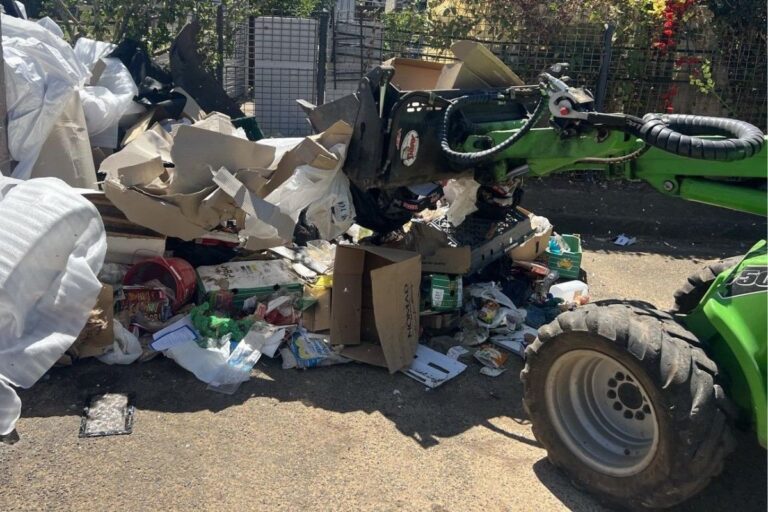
Bin rooms. Floor washed, bin lids wiped, chute base checked. In a Sydney summer, a bin room that goes a fortnight without a wash will attract flies and cockroaches, and once pests are established you’re paying a pest contractor instead of a cleaner.
High-touch surfaces. Intercom panels, lift buttons, door handles, mailbox fronts, stair handrails. Thirty seconds each, and it’s the part most often skipped because it leaves no visible evidence either way.
External entry and pathways. Litter pick, sweep, check the drain grates near the door. Leaf litter over a grate is how a light shower turns into water across the lobby floor.
What belongs in a monthly clean
Monthly covers the surfaces that degrade slowly but look terrible once they go.
Glass. Entry doors, lobby glazing, internal partitions to the height a person can reach. Harbour-adjacent and main-road buildings pick up salt and road film faster, so some sites need this fortnightly.
Light fittings and ceiling vents. Dust the diffusers in lobbies and corridors. Dusty diffusers make a corridor look dim, and committees frequently spend money on new lighting when the existing fittings just need cleaning.
Carpeted corridors. Spot clean and deodorise between full extractions. Catching a spill in the first month is the difference between a spot and a permanent mark.
Car park edges and stair nosings. Sweep the perimeter where grit and leaf litter accumulate, and clean the nosings on car park stairs. Worn, dirty nosings are a common slip point in a basement where the lighting is poor.
Garden beds and turf within the common area. Mowing, edging and weeding run on their own cycle through the growing season, often weekly from October through March and monthly over winter. If your contractor handles both the cleaning and the grounds, the two schedules should appear on one document rather than two.
What belongs in a quarterly or seasonal clean
Quarterly work is the expensive, high-impact end. It’s also where frequency slips, because nobody can remember when it last happened.
Pressure cleaning of the car park, driveway and pathways. Oil drip, tyre rubber and algae build up on a cycle, and a driveway that’s slippery after rain is a liability issue before it’s a cosmetic one. Pressure cleaning is also a drainage question: if the wash water has nowhere to go, you’ve moved the problem rather than solved it, so ask how the contractor manages run-off before they arrive.
Bin room deep clean and chute inspection. A hose-out with the right chemical, plus a look up the chute for build-up. Do this before summer, not during it.
Gutters, downpipes and roof drains. Clear before the storm season. Sydney’s heaviest rainfall events arrive fast, and a blocked downpipe on an apartment block produces water ingress claims that dwarf the cost of clearing it.
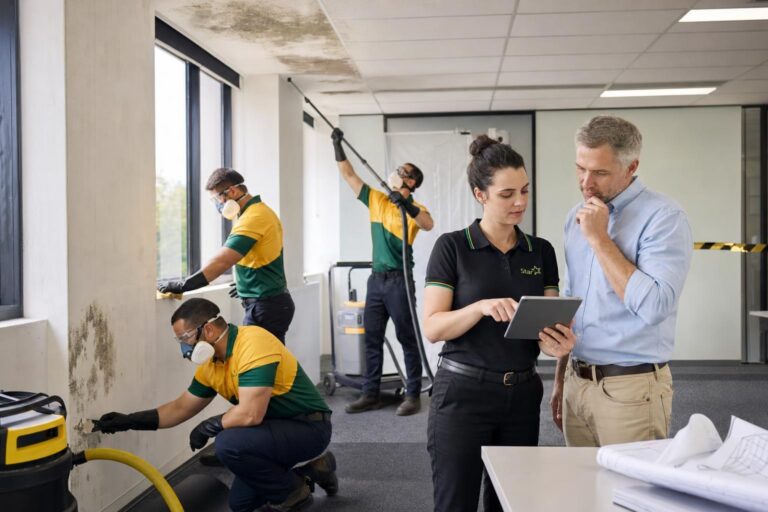
Stairwell and corridor mould check. Through winter, poorly ventilated stairwells on the southern side of a building develop mould on walls and ceilings. Catch it in June and it’s a wash-down. Leave it to September and it’s a repaint.
Graffiti check on external walls, fences and the bin enclosure. Remove it quickly. Tagged surfaces get re-tagged, and an anti-graffiti coating on repeatedly hit walls saves money over a few years.
How to tell whether it’s being done
Three checks will tell you more than a dozen site visits.
Ask for a signed or timestamped record per visit. Not a monthly summary. A record showing which areas were attended on which day, with photos of the bin room and car park once a month. Any contractor running a real schedule already produces this.
Inspect the places nobody looks. Under the entry mat, behind the bins, the top landing of the fire stairs, the corner of the car park furthest from the lift. If those four are clean, the rest almost certainly is.
Watch the complaint pattern, not the complaint count. Repeat complaints about the same area mean the schedule is wrong for that area, not that the cleaner is lazy. A bin room generating odour complaints every February needs a different frequency, and that’s a contract conversation rather than a performance one.
One more thing worth building into the contract: a short written note when the cleaner finds something that isn’t cleaning. A dripping tap in the car park, a loose handrail, a light out in the stairwell. The cleaner is on site more often than anyone else, and that reporting line catches repairs months before a resident does.
Frequently asked questions
Weekly for lobbies, lifts, fire stairs, bin rooms and high-touch surfaces, monthly for glass, light fittings and car park edges, and quarterly for pressure cleaning, gutters and bin room deep cleans. Larger or higher-traffic buildings often move lobbies and bin rooms to twice weekly.
The owners corporation. It engages the contractor and remains responsible for the condition of common property, which is why the schedule and the records matter.
Yes, in most cases. One contractor across cleaning and grounds means one schedule, one point of contact and no argument about whether a leaf-covered pathway is a cleaning job or a gardening job.
The date, the areas attended, anything skipped and why, and photos of the bin room and car park. Add a defect note for anything the cleaner spots that needs a trade.
Start with the areas nobody inspects
If you’re reviewing a contract this quarter, go and look at the bin room floor and the far corner of the basement car park before you read a single line of the specification. What you find there tells you whether the current frequency is right, and it gives you something concrete to put in front of the committee. Then set the schedule by risk and ask for the records that prove it was followed.
Star Property Maintenance has been operating since 2002, which is long enough to have seen what a bin room looks like when the frequency is wrong. If you want a schedule written around your building rather than a generic scope list, tell us about your site. Get a free quote.