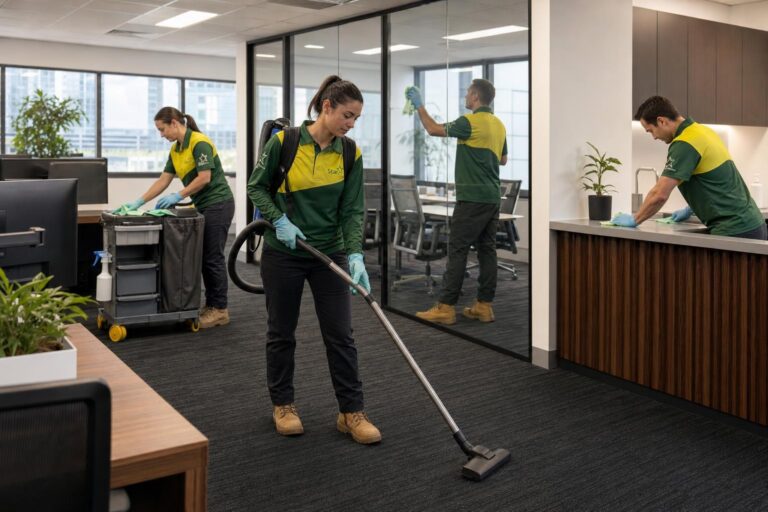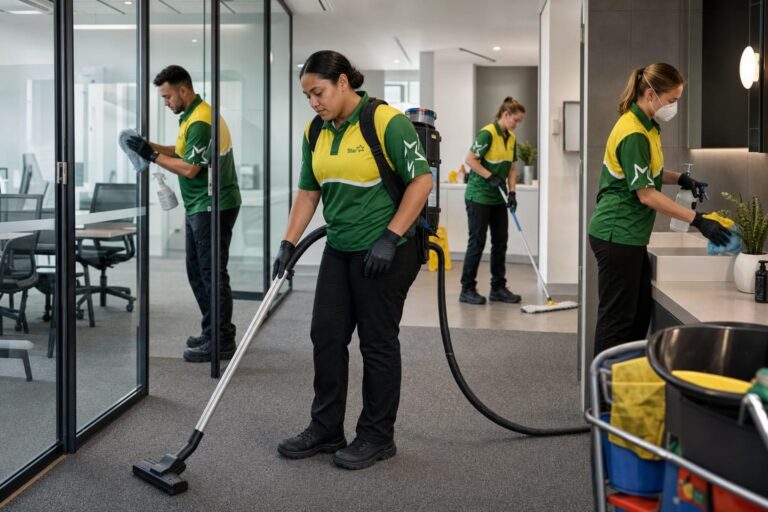
A strata building can be serviced five nights a week and still produce the same three complaints a month about the bin room. That’s the trouble with commercial cleaning written as a single line in a contract: everyone agrees the site should be clean, and nobody has written down what clean means in the fire stair or the loading dock. If you sign the contract and answer the emails, the gap between a workable arrangement and a frustrating one is detail. What’s included, and how anyone would know it had been done.
What commercial cleaning covers on a managed site
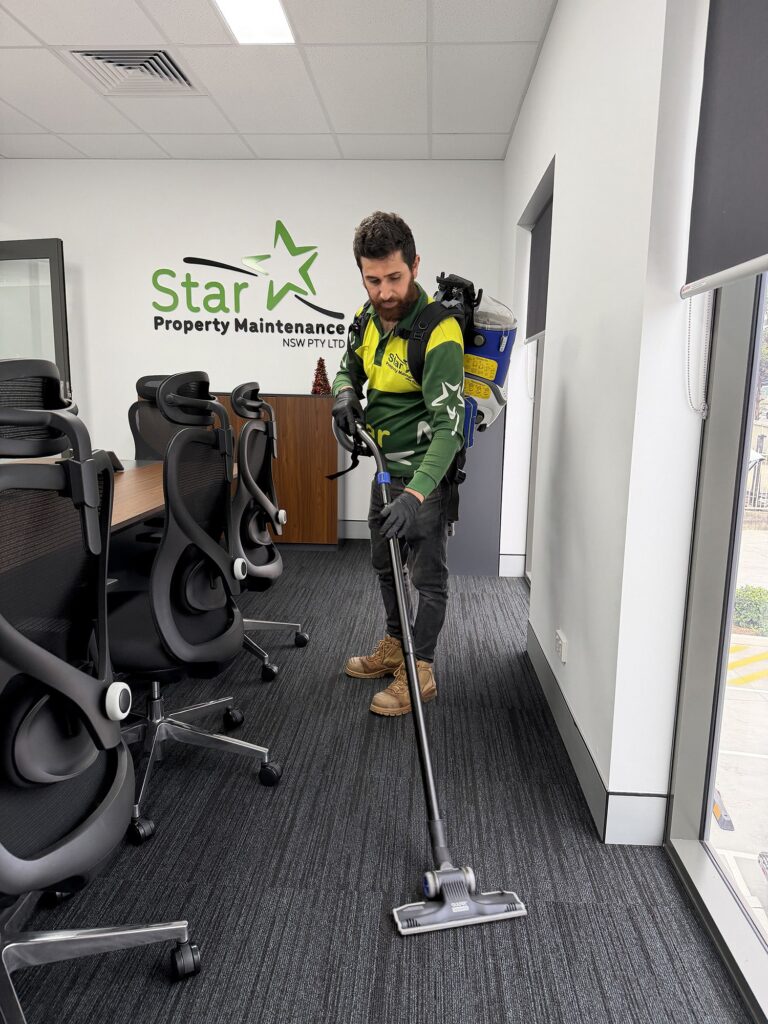
Commercial cleaning is the scheduled cleaning of a workplace or shared property to an agreed written scope: carpets and hard floors, high-touch surfaces, kitchens and washrooms, entries and bin areas, across offices, childcare centres, retail properties, warehouses, strata and industrial sites. It’s defined by what gets cleaned and how often. Deep cleans and pressure cleaning sit alongside the routine round as periodic work.
Most of the disputes we see come back to the same place. A scope lists tasks but no frequencies, or frequencies but no standard of quality. Two sites on near-identical contracts can look completely different after six months, because one said the bin room is washed out weekly and the other said “as required”.
Why the cleaning standard ends up on your desk
You’re measured on whether sites are safe and clean, and on how rarely anyone complains about them. A wet entry mat in July is a slip risk before it’s a presentation problem, and the duty to keep a workplace safe sits with the people who manage and control it, which includes you. SafeWork NSW publishes the guidance an auditor will reach for.
In childcare, aged care facilities, community housing and schools, the cleaning record forms part of how the operator shows it’s meeting its obligations. In a commercial office, the same work shows up in tenant retention and in whether the businesses in the building stay happy with their common areas. Either way, the contractor’s performance reads as yours.
What sits inside the scope
Routine cleaning. The nightly or weekly round: floors vacuumed and mopped, high-touch surfaces wiped, kitchens and washrooms cleaned, bins emptied, entries and glass done. Occupants notice this part every day, so loose wording here costs you the most.
Periodic work. Carpet cleaning, hard-floor maintenance, deep cleans and presentation cleans run on a longer cycle. They need a named frequency, otherwise they slide down the list until the carpet is past saving.
Vacant and turnover cleans. A property between occupants needs a different scope from a routine visit, often with make-good or minor repairs attached. In community housing, the turnaround is the whole job.
External surfaces. High-pressure cleaning of paths and car park aprons, rubbish removal, graffiti removal and anti-graffiti coatings. Car park cleaning in particular is as much about where the water goes as about the concrete.
The best-run sites keep one document that both sides work from, and update it when the building changes.
Questions worth asking about scope
Before you compare two proposals, make each company describe the same site in the same words. Then the differences are real rather than stylistic, and you can see what each one is offering to do.
- Which tasks sit in the routine visit and which are periodic, with a frequency beside each?
- What happens between visits when something goes wrong, such as a spill or a storm?
- Who attends when the regular cleaner is away, and does the standard hold?
- How do you log a complaint, and what does the response look like?
- What on this site falls outside the scope: external areas, grounds, bin rooms or plant rooms?
A professional contractor should be willing to walk the site before quoting. Experience with your kind of property matters more than the size of the team, because staff who work across childcare centres and aged care facilities already know what an auditor asks to see. If you’re earlier than that and still weighing up whether the site needs a contractor at all, look at what types of businesses hire a commercial cleaning company and what the arrangement does for them.
What a Sydney year does to a cleaning schedule
Winter brings mould to the places with no sun and no airflow: south-facing fire stairs and the back of a bin room. That’s a moisture and ventilation problem, so wiping it off without addressing the cause buys a short reprieve and no more. Autumn fills grates with leaf litter, which turns the first heavy rain into a flooded entry.
Summer storms push silt across car parks and paths, and February heat does its own work on bin rooms and kitchen areas. A schedule that reads the same in January as it does in July will be wrong twice a year. Build the seasonal items into the scope rather than raising them as variations each time.
One contractor or several
Plenty of sites end up with a cleaner, a mowing crew, a handyman and somebody for the pressure washing. Each arrangement is sensible on its own. The cost shows up in coordination: four inductions, and four people to ring when the bin room floods on a Friday afternoon and nobody’s scope covers it.
Star Property Maintenance provides tailored commercial cleaning, property maintenance and grounds maintenance services through a combination of in-house teams and trusted specialist contractors, depending on the scope, location and service requirements of each project. The practical test is simple. When something happens on site, how many calls do you make?
Frequently asked questions about commercial cleaning
Routine cleaning of floors, high-touch surfaces, kitchens, washrooms and common areas, plus periodic work such as carpet cleaning and pressure cleaning. The exact list should be written into your scope with a frequency against each task.
Daily for most offices and busy retail, and weekly or fortnightly for quieter sites. Foot traffic and food handling drive frequency far more than floor area does.
Yes. It runs against a written scope agreed with the client, and it has to account for work health and safety duties on the site.
Yes. Star PM offers commercial cleaning, specialist cleaning, grounds maintenance, graffiti removal and handyman work across Greater Sydney.
Start with the complaints you already have
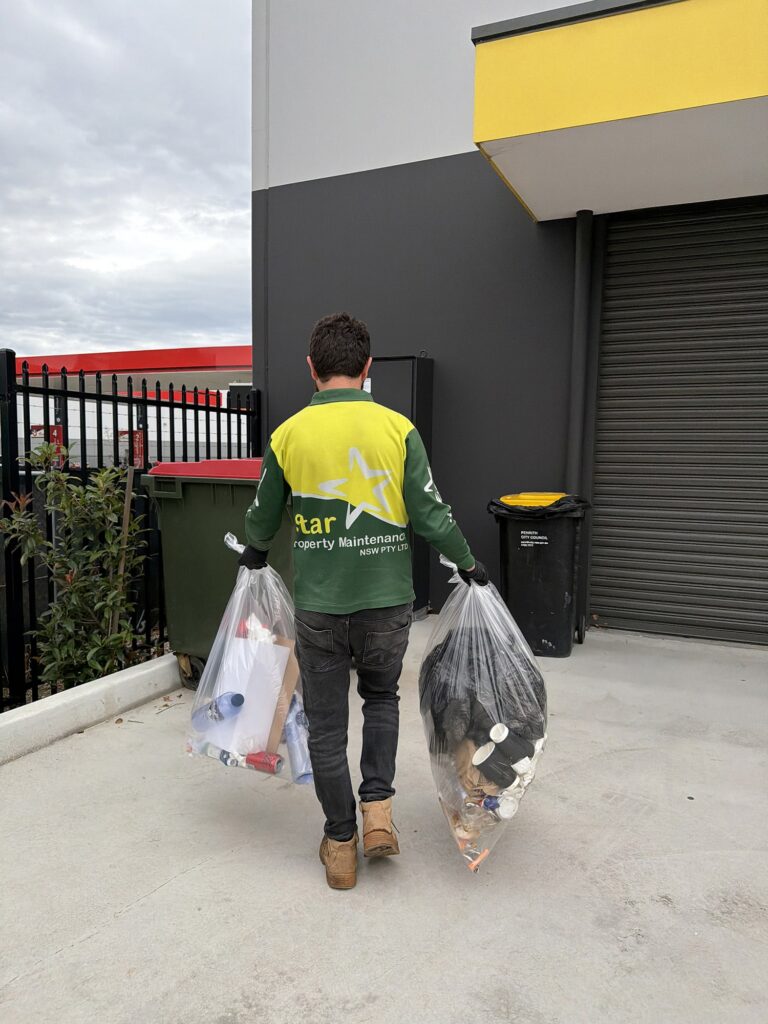
Pull the last three months of complaints from your worst-performing site and put each one against the written scope. The ones you can’t find anywhere in that document are the real gap, and they’re usually the bin room and the stair landing nobody listed. Fix the scope before you change the contractor, because a new cleaner working to the old wording will generate the same emails by March.
Star Property Maintenance is a family owned business that has been cleaning and maintaining property across Greater Sydney since 2002. We handle commercial cleaning, specialist and pressure cleaning, grounds maintenance, graffiti removal and handyman work for community housing, councils, schools, childcare centres, aged care, strata and commercial clients.
When the next contract term comes up, talk to us about your site on 02 9606 8656 or at sales@starpm.com.au, and we’ll go through the scope with you line by line. Get a free quote.